Lost Your Horse's Registration Papers? How to Replace Them
Registration papers get lost in a move, a barn fire, or a shoebox nobody can find. Here's how to request a duplicate from the major breed registries — and how to make sure you never have to do it again.
By Brian Bickell, who builds HorseBook from a ranch in Oklahoma — usually from whatever the folks using it tell me is missing.
Registration papers have a way of disappearing at the worst possible time. They get left with the previous owner, lost in a move, ruined in a flood, or filed so carefully that nobody can find them the day a buyer wants to see them. If you're staring at an empty folder where your horse's papers should be, here's the good news first: the registration itself doesn't get lost. The registry still has the record. What you've lost is a piece of paper, and a piece of paper is replaceable.
Here's how to get a duplicate, and how to make sure this is the last time you go looking for papers that aren't there.
Educational, not legal advice. Every registry has its own forms, fees, and rules, and they change. Use this as a map of how the process generally works, then follow the specific registry's current instructions.
First: the registration is safe
This is the part that saves people a lot of panic. A breed registry keeps a permanent record of every horse it registers — name, number, pedigree, ownership history. The paper certificate you hold is a copy of that record, issued to the owner. Lose the paper and the underlying registration is still sitting in the registry's database with your horse's name on it.
So replacing lost papers isn't re-registering the horse. It's asking the registry to print and mail you a new certificate of a registration that already exists. That's a smaller, cheaper, more routine request than people fear.
What you'll generally need
The exact requirements depend on the registry, but almost all of them ask for some version of:
- The horse's registration number, or failing that, its registered name. If you have neither, the registry can often still find the horse by your name as the recorded owner plus the horse's description — but it's slower.
- Proof that you're the current recorded owner. If the horse is registered in your name, this is usually straightforward. If it isn't, see the transfer note below.
- A completed duplicate/replacement request form. Most registries have one, online or as a PDF.
- The replacement fee. Duplicates cost money — typically a modest fee — and expedited handling usually costs more.
The single biggest thing that makes this fast or slow is whether you know the registration number. If it's written down somewhere, this is a ten-minute request. If it's only on the paper you lost, you're relying on the registry to look the horse up.
How to request a duplicate from the major registries
The pattern is the same across registries — contact them, prove ownership, pay, wait for the mail. Where to start for the common ones:
- American Quarter Horse Association (AQHA) — request a duplicate certificate through your AQHA account or by contacting member services. You'll need the registration number or registered name and proof you're the owner of record.
- The Jockey Club (Thoroughbred) — handles duplicate registration certificates for Thoroughbreds; contact them with the horse's name or number.
- American Paint Horse Association (APHA), Appaloosa Horse Club (ApHC), Arabian Horse Association (AHA), and the various warmblood and breed registries — each has its own duplicate-certificate process, generally reachable from the registry's website under registration services or member support.
If you're not sure which registry issued the papers, the horse's breed points you there, and the previous owner or your breed's national association can help you find the right one. Don't guess and send a fee to the wrong registry.
The catch: is the horse registered in your name?
Here's the one that trips people up. Registries issue papers to the recorded owner. If you bought a horse and the previous owner handed you a signed certificate but you never sent in the transfer, the registry may still show the horse in their name — and a duplicate certificate would go to them, not you.
If that's your situation, you'll generally need to complete the transfer of ownership as part of getting papers you can hold. That usually means a signed transfer document or bill of sale from the previous owner. It's worth sorting out regardless: an untransferred horse is a headache at sale time, at shows, and — if you haul through the western states — at a brand inspection, where your registration is part of how the inspector confirms you own the horse. Our buying and selling paperwork guide walks through transfer, and the breed registration guide covers how registration works in the first place.
How to never do this again
Replacing papers once is annoying. Setting things up so you never have to is a ten-minute job:
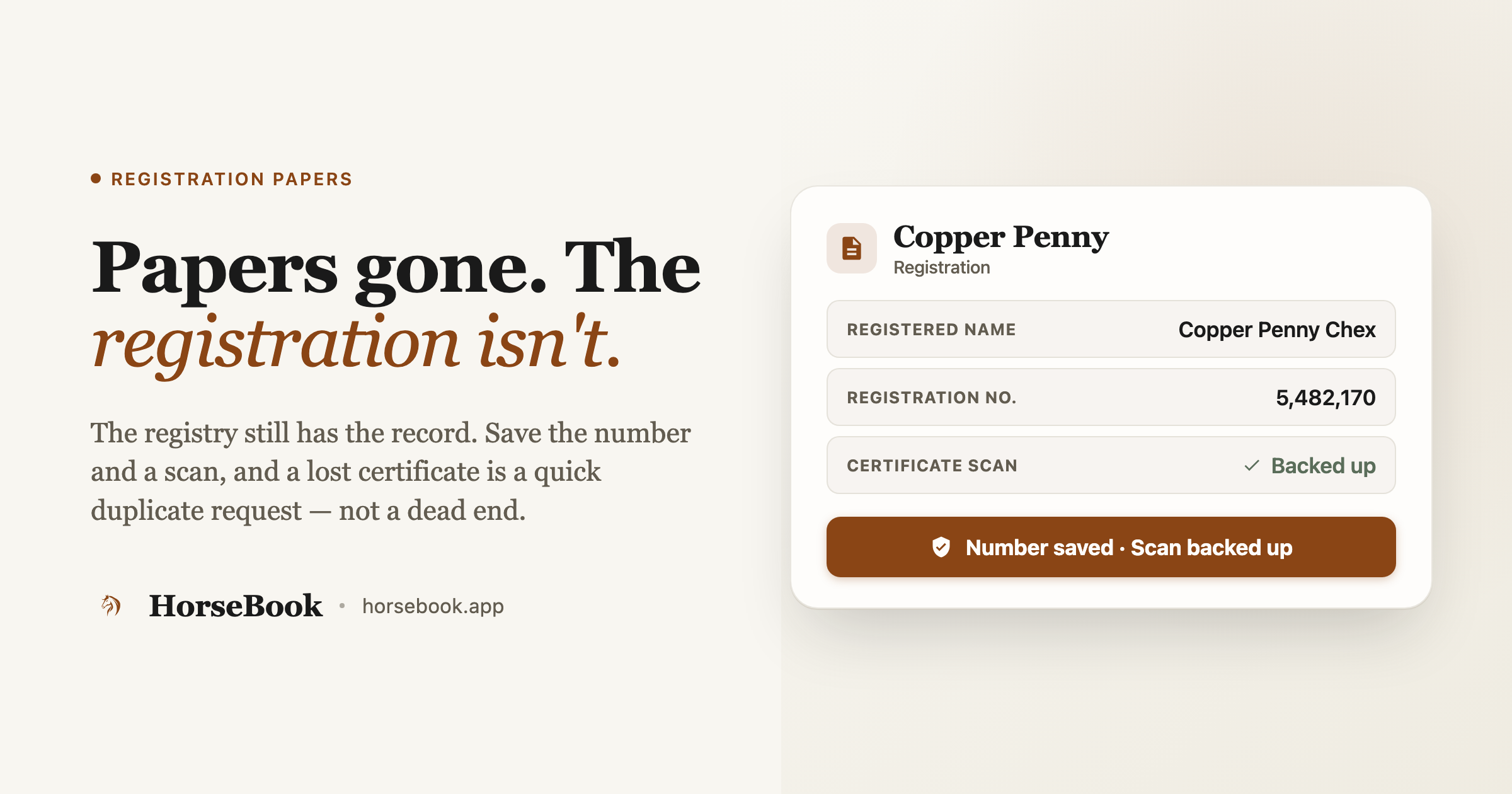
- Scan the certificate the day it's in your hands. A photo of the registration papers, filed with the horse's records and backed up, means the physical copy can burn or flood and you still have the document. This is exactly why document scanning is built into HorseBook — snap the papers, and they're on your phone and in the cloud, filed with that horse.
- Record the registration number where it isn't the paper. Put the registered name and number on the horse's profile. Then even the worst case — papers gone, no photo — is a fast duplicate request instead of a scavenger hunt, because you can hand the registry the number.
- Keep the ownership trail. Save the bill of sale and any transfer documents with the horse too. If the papers ever come into question, the trail is right there.
The whole idea behind keeping a horse's records in one backed-up place is that the record survives things the paper doesn't. A shoebox in the tack room is one barn fire away from gone. A scanned copy and a recorded registration number are not.
The bottom line
Lost registration papers feel like a disaster and usually aren't one. The registration lives at the registry; the paper is a replaceable copy. To get a duplicate:
- Figure out which registry issued the papers.
- Gather the registration number or registered name and proof you're the recorded owner (transfer first if the horse isn't in your name).
- File the registry's duplicate request and pay the fee.
Then scan the new certificate the day it arrives, record the number on the horse's profile, and make this the last time you go looking for papers that aren't there.
Try it
HorseBook runs on the iPhone app and the web app, with a 14-day free trial and no credit card. If your papers are currently in a folder you'd have to go find, scan them into the horse's record while you're thinking about it — it's the cheapest insurance there is.
And if there's something about tracking registration and ownership paperwork that HorseBook doesn't do yet, tell me. I read every message.
Frequently asked questions
Can I get a duplicate of my horse's registration papers?
Yes. Every major breed registry issues duplicate or replacement certificates. You contact the registry that issued the original, prove you're the recorded owner, pay a fee, and they mail a new certificate. The horse's registration itself never goes away — the paper is replaceable.
What do I need to request a duplicate registration certificate?
Usually the horse's registered name or registration number, proof that you're the current recorded owner, and the replacement fee. If you don't have the number, the registry can often find the horse by registered name plus your name as owner. Having the number saved somewhere makes this far faster.
How long does it take to get replacement horse papers?
It varies by registry and how you file — often a couple of weeks by mail, sometimes faster if the registry offers online requests or expedited service. Plan ahead if you need the papers for a sale or a show with a deadline.
The horse isn't registered in my name. Can I still get papers?
You'll usually need to complete a transfer of ownership first — the registry issues papers to the recorded owner. If you bought the horse and never transferred it, sort the transfer out with the registry; a signed transfer document or bill of sale from the previous owner is typically part of that.
How do I avoid losing horse papers again?
Scan the certificate and keep a photo backed up in the cloud, and write the registration number down somewhere that isn't the paper itself. A physical certificate can burn, flood, or vanish in a move; a scanned copy on your phone and a recorded registration number mean the worst case is a quick duplicate request, not a dead end.