How to Keep a Barn Farrier Schedule for Multiple Horses
When the farrier trims a whole string on one visit, tracking it horse-by-horse is backwards. Here's how to keep a single farrier schedule for a group of horses — one date, one reminder, one 'done' — instead of juggling a wall calendar and a dozen phone alarms.
By Brian Bickell, who builds HorseBook from a ranch in Oklahoma — usually from whatever the folks using it tell me is missing.
If you've got more than a couple of horses, the farrier schedule is one of those things that's simple until it isn't. One horse, you just remember. A whole string, and suddenly you're keeping a wall calendar, a note in your phone, and a running guess about who's due and who got done last visit. Miss a cycle and you've got a horse standing around on long feet.
The awkward part is that most tools make you track it the wrong way — one schedule per horse, set up over and over. But that's not how the visit happens. The farrier comes on one day and trims the group. So the schedule should belong to the visit, not the horse. Here's how to set that up.
Put the whole group on one schedule
In HorseBook, this is a care plan — one recurring schedule that a group of horses shares. You make one farrier plan, put the horses on it, and it tracks the next due date for the whole group at once.
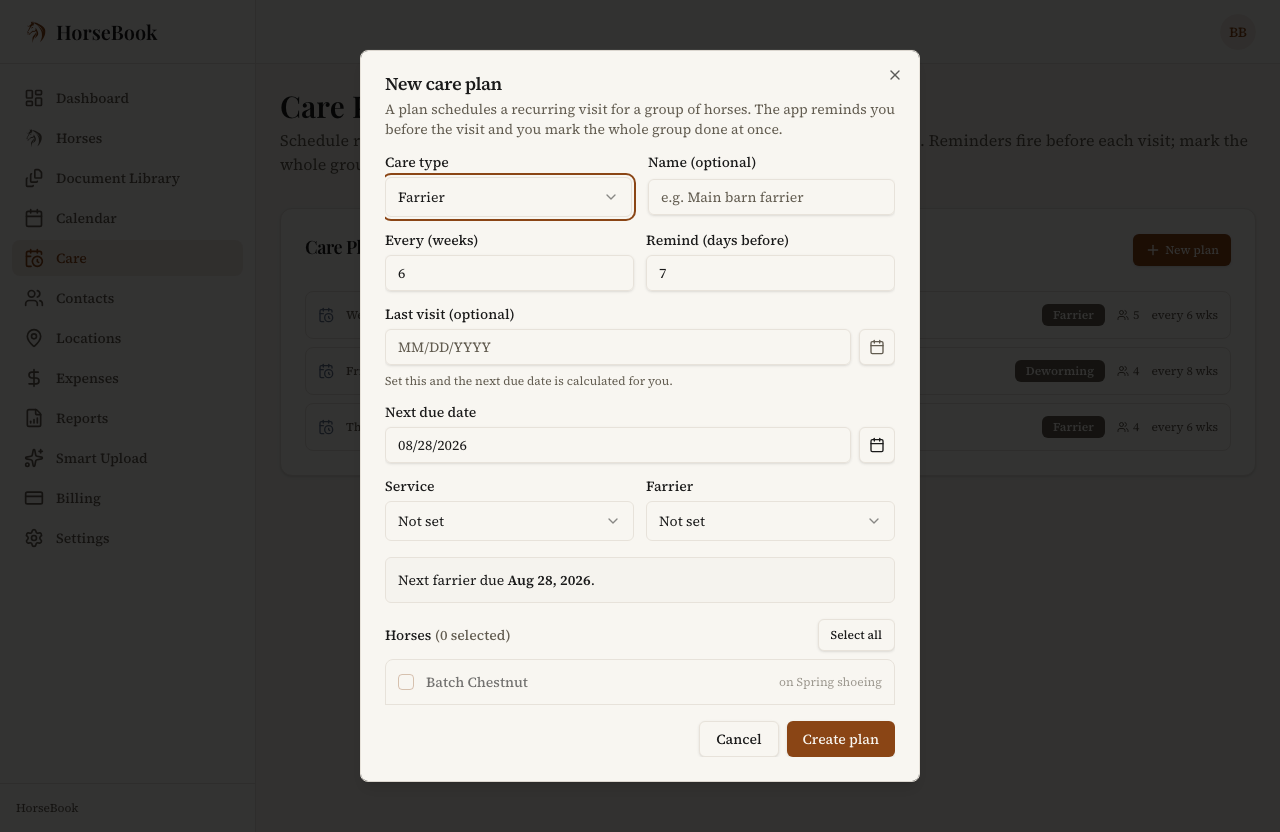
- Open Care in the sidebar and hit New plan.
- Set the care type to Farrier, put in however often your farrier actually comes (the cadence is yours to set — HorseBook doesn't guess it for you), and the next due date.
- Optionally name it ("Main barn farrier") and attach your farrier as the contact, so their number rides right along with the schedule.
- Pick the horses. The list starts with a Select all button, so getting the whole barn on the plan is one tap — then just uncheck any that trim on a different cycle.
If a few horses run on a tighter cycle — youngstock, or one with a corrective shoeing situation — just make a second farrier plan with its own cadence and put those horses on it instead. A horse can be on one farrier plan at a time, so nothing double-books.
One "done" when the farrier's been out
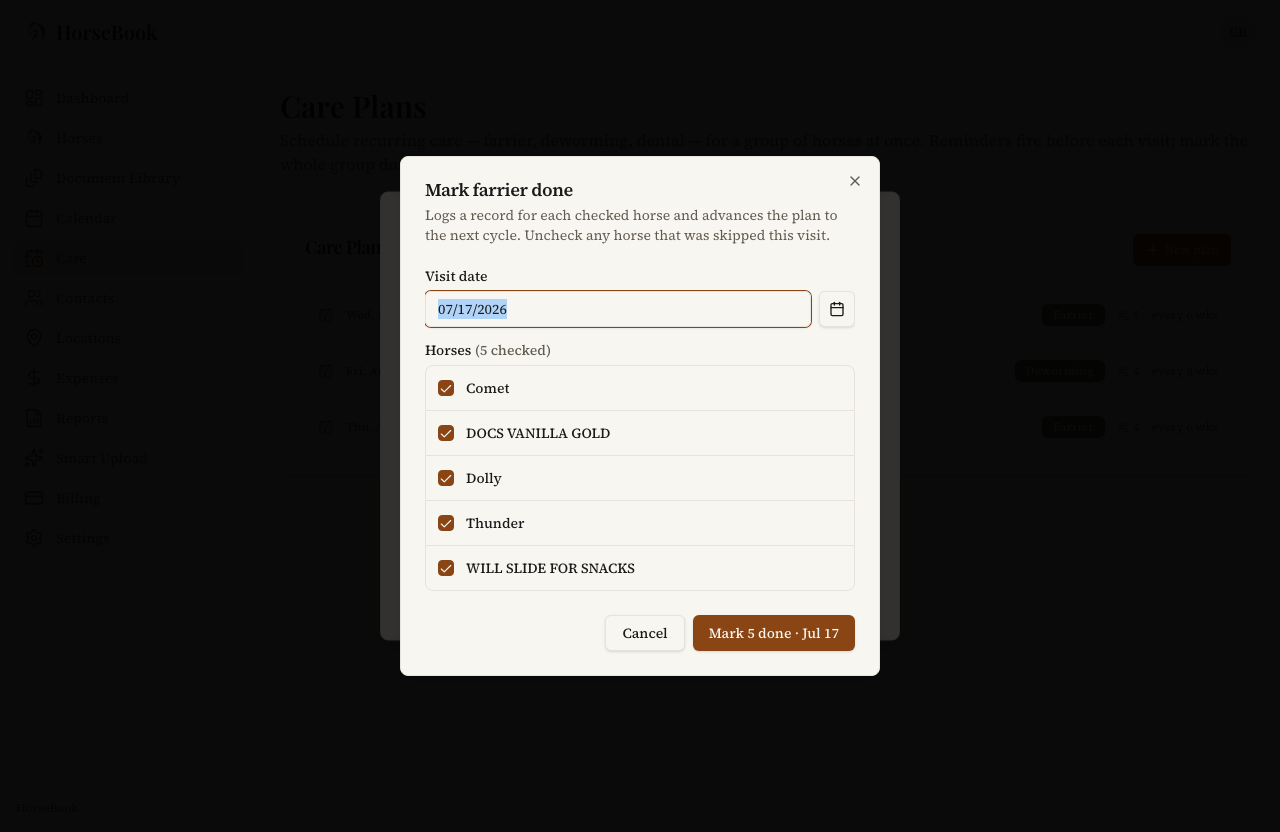
Here's where the group approach earns itself. When the farrier's finished, you don't check off eight horses. You open the plan, hit Mark farrier done, and every horse in the group is already checked. Uncheck anyone who got skipped that day, confirm, and HorseBook logs the trim for each horse and rolls the schedule forward to the next visit — in one step.
See who's due at a glance — and get reminded before
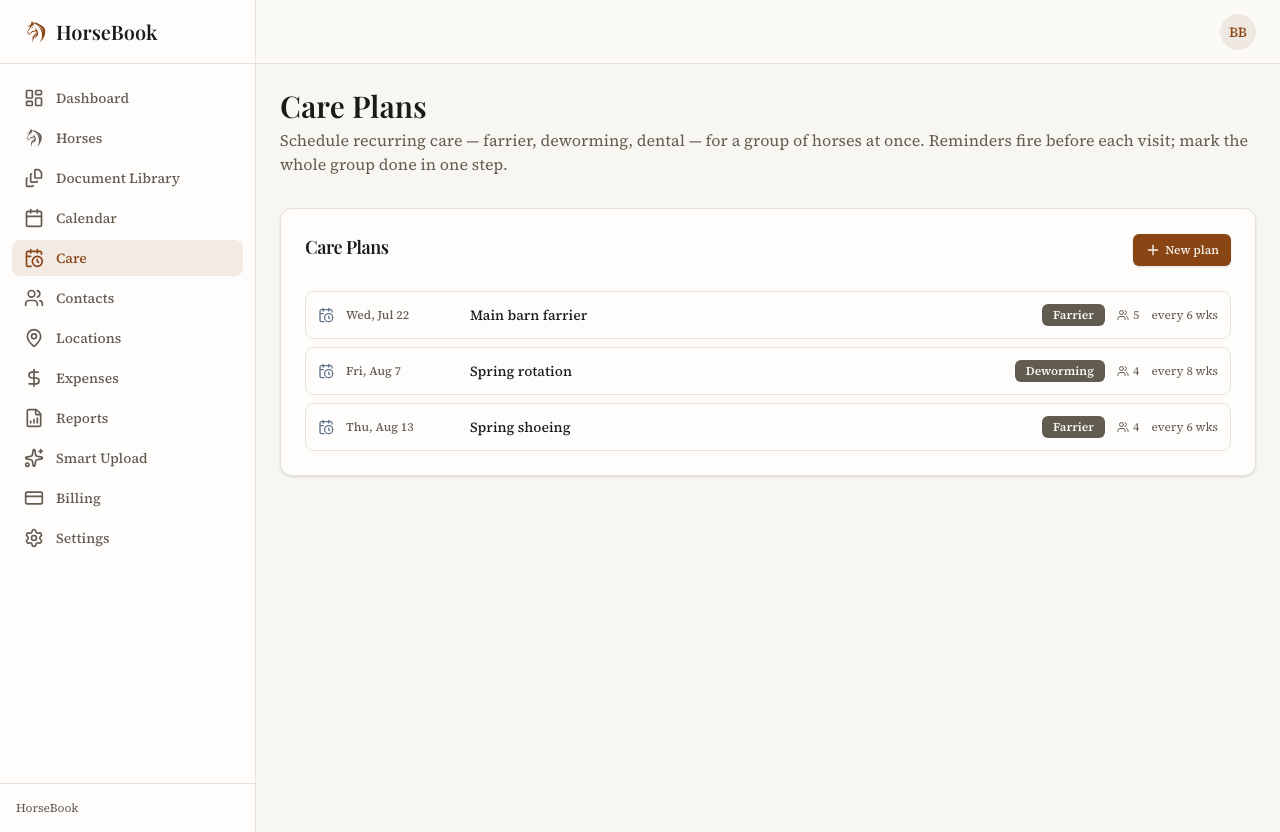
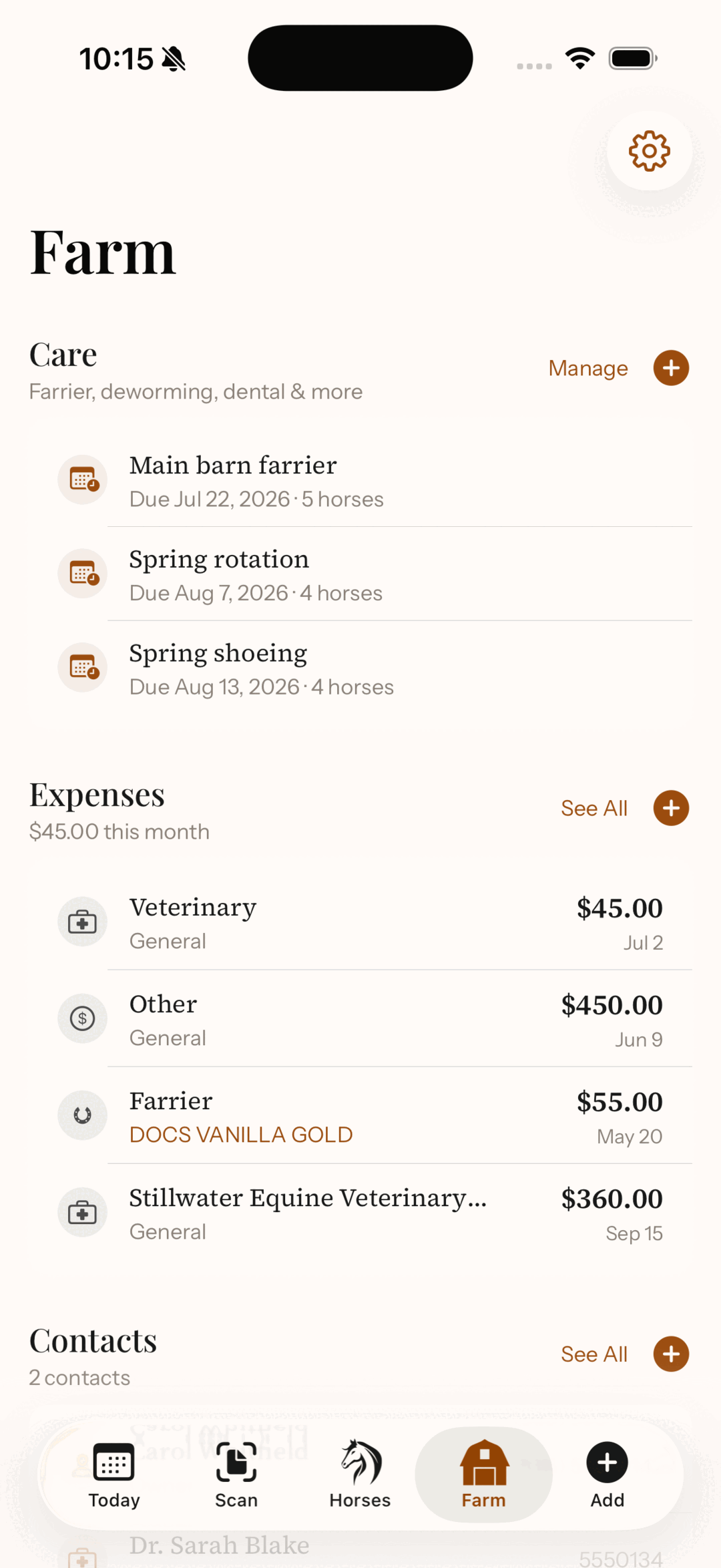
The Care screen shows every plan with its status right there: Due today, an upcoming date, or Overdue in red if one slipped. And you get a heads-up before the group's due date — one reminder for the whole barn's trim, not a pile of separate alarms you'll end up muting.
A note on cadence
I'll stay in my lane here: how often your horses need trimming is between you and your farrier, and it depends on the horse, the season, the work, and the hoof. HorseBook doesn't tell you the interval and doesn't pretend to — you put in the cadence you and your farrier already run on, and the app just keeps the calendar so you don't have to. That's the whole job.
This works the same way for deworming and dental cycles, too — same kind of group schedule, same one-tap "done." If you want the fuller walkthrough of the whole system, I wrote it up in Care Plans: schedule the farrier for the whole group.
This post is about the schedule. The other half — what a farrier record should capture per horse, how the invoice gets tracked separately from the work, and how to get a cost-per-head number out of a year of visits — is in farrier record keeping.
Try it
HorseBook is on the iPhone app and the web app, with a 14-day free trial and no credit card. Set up your farrier plan, drop the whole barn on it, and see how it feels to schedule the visit instead of the horses.
And if there's something about how your barn runs its farrier cycle that this doesn't handle, tell me — the group approach exists because someone told me the first version had it backwards.